
How to Pack for City Breaks Without Overpacking
- Jun 28
- 6 min read
Updated: Jun 29
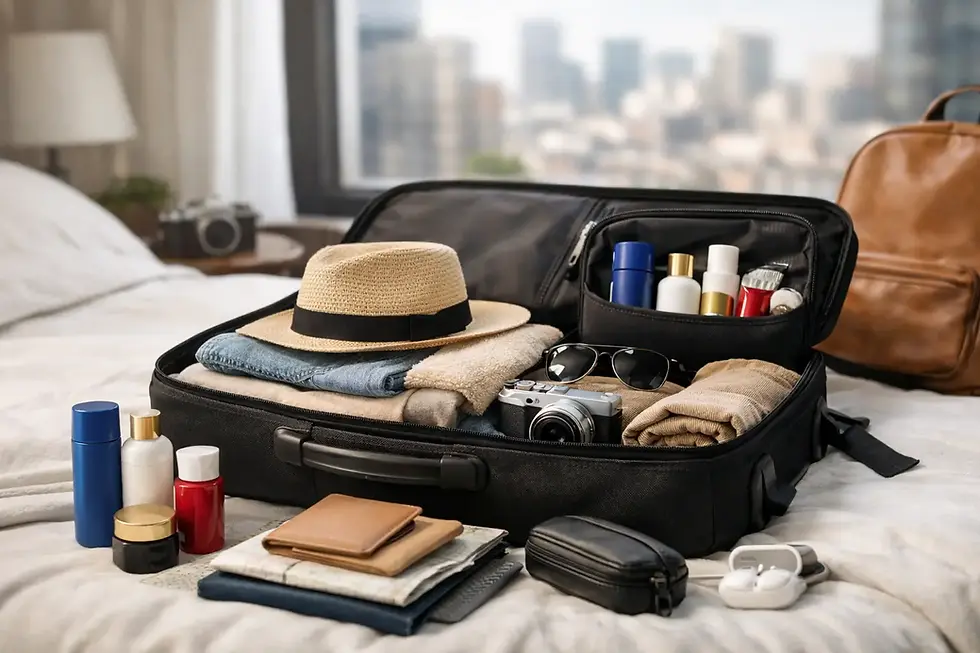
You do not need a bigger bag for a city break. Most people need fewer "just in case" items, a better outfit plan, and toiletries that will not cause delays at security. If you are wondering how to pack for city breaks without ending up with a heavy case and half your wardrobe untouched, the goal is simple: pack for the trip you are actually taking, not every possible version of it.
Why city break packing goes wrong
City breaks create a particular kind of overpacking. A two or three-night trip feels short, but it often includes different settings - travel days, daytime sightseeing, evenings out, maybe a nicer dinner, and a lot of walking. That is when people start adding extra shoes, backup outfits and full-size toiletries that take up more room than they should.
The other problem is that city trips are usually fast-moving. You might be flying hand luggage only, heading straight from the airport to your hotel, or trying to avoid paying extra for hold baggage on a low-cost airline. In that situation, bulky luggage is not just inconvenient. It slows you down.
How to pack for city breaks with a simple outfit plan
The easiest way to pack less is to stop thinking in complete outfits and start thinking in combinations. For a weekend away, you usually need one travel outfit, one or two tops to swap, one pair of bottoms, underwear and sleepwear, plus one smarter option if you have dinner or drinks planned. If your colours work together, the same jacket, shoes and bag can cover most of the trip.
This is where fabric and practicality matter more than variety. Choose items that do not crease easily and can be worn more than once without needing special care. Denim can work, but it is heavier than other options and takes longer to dry if you get caught in rain. For many city breaks, lighter trousers or a simple dress with layers are easier to manage.
Weather matters, but not enough to justify packing for every forecast. If the temperature might dip, a compact knit or light waterproof layer usually makes more sense than adding a second coat. The trick is to build around one reliable outer layer and shoes you can actually walk in for hours.
Shoes are usually the packing mistake
If there is one item that regularly takes up too much space, it is shoes. For most city breaks, wearing your bulkiest pair in transit and packing one extra pair is enough. That might mean trainers for the day and one smarter, lightweight option for the evening.
It depends on the type of trip. If you are travelling for work and need polished shoes for meetings, your second pair earns its place. If it is a casual weekend with museums, markets and restaurants, three pairs is rarely necessary. Shoes are heavy, awkward to fit around everything else, and often the first sign you are packing for fantasy plans.
Toiletries: keep them small, compliant and easy to access
Toiletries are where short-break packing often becomes fiddly. Full-size bottles are the obvious issue, but decanting products into random containers can be nearly as frustrating. You save space, then spend time labelling, checking volumes and wondering whether everything will get through airport security without trouble.
For hand luggage, cabin-approved toiletries make the process much simpler. You know the sizes are right, you avoid repacking from larger bottles at home, and you do not lose space to products you will not finish on a short trip. Familiar brands help too. Most people do not want to experiment with their shampoo, face wash or toothpaste the night before an early flight.
If you are packing only a personal item or a small cabin bag, a ready-packed travel toiletry kit is often the most efficient option. It removes the guesswork, keeps everything travel-sized, and makes it easier to get through security with confidence. For a quick city break, convenience is the point.
What toiletries do you actually need?
Be realistic about the length of the trip. For two or three nights, most travellers need only the basics: toothpaste, deodorant, a small shampoo, conditioner if you use it, body wash, moisturiser, and any daily skincare or medication. You may also want a razor, a compact fragrance or make-up essentials, but this is the moment to edit, not expand.
Hotel provisions can change the calculation slightly. If you know your hotel provides decent shower gel or shampoo and you are happy to use it, you can pare back further. If you prefer your own products or have sensitive skin, take the small versions you trust. Either approach works. The mistake is carrying full-size backups for both.
A ready-made kit is often the quicker option if you want certainty.
Option | Pros | Cons |
Buy travel minis individually | Full product choice | Time spent sourcing products |
Decant into bottles | Uses products you already own | Preparation required and risk of leaks |
Pre-packed travel kit | Most convenient, ready to travel, no sourcing required | Product selection determined in advance |
Use your bag space properly
City break packing is often less about quantity and more about shape. Soft items like T-shirts, underwear and knitwear can fill gaps around shoes or toiletry bags. Heavier items should sit at the base of the bag, with anything you may need at security or during the flight kept within easy reach.
Packing cubes can help if you like structure, especially for separating daywear, sleepwear and toiletries. They are not essential for everyone. On a short trip, a simple layout can work just as well if you are disciplined about what goes in the bag in the first place.
Leave some breathing room. That matters more than people think. A bag packed to the limit on the way out is harder to close after you have added receipts, chargers, a bottle of water or a small purchase from the trip.
What to keep in your personal item
Even if your main bag goes in the overhead locker, your personal item should carry the things that matter most during the journey. That usually means passport, wallet, mobile phone, charger, headphones, medication, travel documents and liquids for security.
If you arrive in the city before check-in, it is worth adding one or two practical extras such as sunglasses, a reusable tote or a compact umbrella depending on the forecast. Keep this bag functional. It is not a second chance to overpack.
How to pack for city breaks if you are travelling for work
A work trip needs a slightly different balance. You still want to travel light, but you may need more structure in your clothing choices and less room for trial and error. Start with the fixed points - meetings, dinners, client-facing time - and pack around those first.
The best approach is to choose one smart base that works across multiple settings. A blazer, shirt or blouse, and one pair of smart shoes can usually handle the formal side of a short trip. Then add one casual change for travel or downtime. You do not need a separate look for every hour of the itinerary.
Toiletries are where business travellers often save the most time. Pre-packed, cabin-friendly products cut out a surprisingly tedious part of trip preparation, especially when you are flying early or packing the night before.
If you regularly fly on flights with Ryanair, easyJet, Jet2, Wizz Air or TUI, understanding both airline baggage allowances and airport liquid rules can make packing much easier.
A quick packing check before you leave
Before you zip the bag, ask three questions. Will you wear each clothing item at least once? Are your toiletries the right size for cabin travel? Can you carry the bag comfortably through stations, airports and city streets?
If the answer to any of those is no, remove something. Packing well for a city break is not about proving you can fit everything in. It is about making the trip easier from the moment you leave home.
That is why the best-packed bag usually looks a bit sparse before departure. It has room to move, only what you need, and nothing in it that will make security, walking or unpacking harder than it has to be.
A city break should feel light, not like a logistics exercise. Pack for the plans you have, keep your toiletries simple, and give yourself one less thing to think about before take-off.


Comments